

Virtual Campus Visits for Seniors
Shelly Humbach • April 6, 2020

The coronavirus has drastically altered life around the world, and while college admissions isn’t life and death, it’s safe to say that the admissions process has been upended. Colleges around the country have canceled in person classes and most have adopted an online format for the remainder of the semester. With that, it’s certain that spring college visits will be occurring in non-traditional ways. So how can you get a feel for a college when the campus is closed?
In the coming weeks, it’s possible that we will see many colleges postpone the May 1 enrollment confirmation date. For now, it’s best to assume that you may need to make some choices without doing an in-person visit. The NY Times had some great suggestions for “Making Decisions When Colleges are Closed”.
It boils down to using your virtual resources.
- Virtual Tour – Many schools already have a virtual tour available. In GuidedPath, you can find nearly 500 virtual tours through YouVisit on the college profile pages. Other collections of online campus tours include YoUniversityTV or CampusTours.com.
- Extended Virtual Visit – Admissions offices around the country are scrambling to enhance their virtual visit options for seniors. Stay in touch with the schools that have accepted you to find out what they will offer. Zoom meetings with admission officers, chats with student tour guides, FaceTime appointments with financial aid counselors, or phone calls with faculty or advisors. Universities are excited to welcome you to campus as an admitted student even if that means welcoming you remotely.
- Crowdsource a Connection – Chances are you may know someone who knows someone who is a current student. And now that those current students have largely returned home, they may be available and excited to chat. Reach out to your friend network or your college advisor to make a connection.
- Stay Positive – Although it is certainly an unprecedented time for colleges and the country, college campuses aren’t going anywhere. Students will return to school and you will have a place in a freshman class. For now, it’s all about making the most informed choice possible.
Take Action
The best course of action is to stay informed and stay in touch with the colleges to which you have been admitted. Check your email daily and check college websites for updated deadlines and procedures – including financial aid, enrollment forms, housing contracts, orientation and registration. Expect a lot of communication from colleges in the coming weeks. Be sure to have a method for organizing this information. And keep in touch with your advisor to stay on track.

As of August 2026, at least 11 major universities (including Yale, Georgia Tech, UNC-Chapel Hill, the University of Virginia, the University of Georgia, the University of Miami, Colgate, Cornell, the University of Vermont, TCU, Tulane and the University of Washington) have fully eliminated their supplemental essays for the 2026-27 application cycle, with several more cutting prompts back. Admissions officials say the essays were no longer telling them anything new, exhausted their reading staff, and increased applicant stress. Generative AI is cited as a factor at some schools. I would add - there’s another motivation for the elimination. Not having to write a supplemental essay will attract more applicants. More applicants drive the acceptance rate down, resulting in a higher “ranking”. I said what I said.

As I embark on my 20th application cycle as an Independent Educational Consultant (IEC), I am reminded once again that the college admissions landscape continues to change, with a sharp rise in uncertainty and outright nonsense. So it was with tremendous joy and satisfaction that I came across this message written by a seasoned college admissions counselor. The writer captured what we all feel and provides a bit of insight into the process. Enjoy. An Important Message to Every College-Bound Student and Their Parents Hi, I am an admissions counselor at a T20 public university. I've done this for 20 years. We average about 70,000 applicants per year and have an acceptance rate of about 10%, which can be lower depending on your major. We are ranked in the top five for job placement within one year of graduation. 96% of our grads have jobs within three months of graduation. The average starting salary for our grads is around $95k-$113k, depending on major. We give about 15 merit scholarships per year. That's it. I say all of that because I keep reading about how surprised everyone is with the lack of scholarships. It is so, so tough when you feel like your kid has done everything right, and you expected them to land some merit aid because of their hard work. It is also very eye-opening when it doesn't happen. Remember, your child is a big fish in a small pond in high school, so it is easy to think they are one of a few doing it all right...but once they enter that big pond and become a small fish, you realize so were tens of thousands of other kids. Admission to our university feels like a lottery. It isn't, but I know it feels that way. When we are selecting between dozens of kids with perfect SAT scores, perfect GPAs, hundreds of hours of community service, lots of activities and awards, etc it comes down to the intangibles. I cannot overstate how important essays are when a college requests or suggests them. More often than not, I use the essays to decide who I am recommending and who I am not recommending, because these kids are all doing the same right things. Your kid's application is nearly identical to 30,000 others...at least. Let them tell admissions who they are and why they are special. My own kid is in his senior year, so I am walking this path for the first time as a parent. I recommended my kid look at small liberal arts colleges because that is where the money is. He was accepted to a handful, and they were far more generous than our school could ever be. He will pay less to go to one of these schools than he would as an in state student at the college where I am employed. For the record, he will finish #2 in his senior class with a SAT of 1500, but we realized his major didn't require a specialized school and he wanted to graduate with no to little debt. He didn't even apply to schools that aren't known for being generous. If less than 30% of kids receive merit scholarships, he didn't apply. I know it is easy to chase the big name schools. People want the D1 culture or the big names, but I implore you to look at small schools too. A lot of them are just as good as the big names but don't play the rankings game. Look at schools like Denison, Wittenberg, Dickinson, Agnes Scott, Reed College, Centre College, Wabash, Franklin & Marshall, etc. Lastly, no matter where your kid goes to school have them start going to the career center early. Like freshman year. No one is going to force your kid to go. It is on them as a student to take the next step. Most career centers are really underutilized and are hidden gems, even at the smallest schools. Something else most parents don't realize is it rarely matters where you go to college. Yes, for some degrees it does, but for like 75% of college grads it doesn't matter. Go look at some of the companies your kid dreams of working at on LinkedIn. Check where those employees worked. I can almost guarantee you it is going to be a far greater mix of schools than you expect. My husband works with people who went to community college and Harvard... same job titles, same responsibilities, pay is within $5k of each other. I know the process sucks. Schools try to make it as transparent as we can. We know we are turning away good kids. I promise. I've sat on admission committees where we are literally deciding between nearly perfect academic resumes. It is really important not to encourage your kids to hyperfocus on one school. Even worse when the school counselors do it at their high school. Every college is a crapshoot, even the ones you think should be safeties. I really wanted to say this because I can feel the hurt and surprise in so many posts, and I get it. Truly. We get calls from upset parents every single day during admissions cycles, pleading with us to please take their kid or begging us for financial aid. Sometimes I am not sure who is more upset - the kid or the parents. But know your child will land where they are meant to land. A no is redirection, and it isn't saying your kid isn't worthy. It is saying, in this admissions cycle, at this time, on this day, we cannot accept your child's application.

As an Independent Educational Consultant with 20 years of experience, if I could tell every parent of a college student to do one thing — just one — this is it. Set up the voluntary FERPA release with your student's college or university before move-in day. Here's why it matters so very much: On the day your child enrolled, federal law transferred all rights to their educational records from you to them. Therefore, the college or university cannot speak to the parents about anything . This includes grades, enrollment status, financial aid, a mental health crisis, or a billing snafu that prevents them from registering for classes. It takes less than 5 minutes to complete the FERPA release. Go to their student portal → privacy settings or authorized users → add your name. It’s that simple. Inform your student that you have signed the FERPA release and explain its critical importance. This is less about monitoring grades (although if you’re funding their education in full or in part, you are entitled to this information) and more about responsible parenting, even for a college-aged child. Signing the FERPA guarantees that you can help if something goes wrong that your child cannot handle alone. A mental health situation. A financial emergency. Anything where your child needs you to communicate with the college or university. That's what the FERPA makes possible. Without it, there is no communication between the parent and the college or university. If you found this information useful, please share it with other parents of college-bound children.

Parents: Before Your Student Launches, Get These Legal Docs in Place

Major new global mental health report from Sapien Labs, analyzing data from 2.5 million people across 85 countries. The findings are hard to ignore. 1) The generational flip. Young adults used to be the mentally healthiest cohort. Not anymore. In every country studied, they are now doing worse than older generations. 2) What’s driving it? Four factors account for roughly 75% of the decline: weaker family bonds, reduced spirituality, earlier smartphone access, and greater consumption of ultra-processed foods. Not exactly shocking, but now it’s quantified. 3) Wealth isn’t helping. The decline is most severe in wealthier, more developed countries where kids get smartphones earlier, eat more junk, have looser family ties, and have less connection to meaning or faith. 4) Earlier phones, bigger problems. The younger a child gets a smartphone, the higher the likelihood of suicidal thoughts, aggression, and other mental health challenges later on. 5) Gen Z = the test case. This is the first generation raised on smartphones, and the data is clear: earlier access correlates with worse outcomes in adulthood. We’re not just talking anxiety and depression. Think detachment from reality, increased aggression, and suicidal ideation. Why? Disrupted sleep, exposure to harmful content and predators, cyberbullying, and, critically, less real-world social development. Kids aren’t learning how to read faces, navigate group dynamics, or build human connection. And the effects? Most pronounced for kids who get smartphones before age 13 . The report is short, accessible, and important. Read it here: https://lnkd.in/gXev9WCK

For many students and families, navigating the ever-changing college admissions landscape can feel overwhelming. That’s where Shelly Humbach, founder of Humbach Education Consulting, LLC, comes in — blending experience, strategy, and compassion to help students find their best academic fit. A Career Pivot Rooted in Purpose Shelly began her professional journey as a litigation paralegal — a demanding role she excelled in for over two decades. But a volunteer role in a high school Post-Grad Department ignited a new passion: college admissions counseling. What started as service turned into a calling. With a clear vision, she pursued formal training through UCLA’s College Admissions Counseling Program, graduating with distinction, and became deeply involved in her profession through memberships in every relevant organization she could join. Nearly two decades on, she continues to refine her craft, guiding students with expertise, humor, and no nonsense. What Makes Her Approach Different? Shelly’s philosophy centers on customized strategy. Every student receives a personalized plan tailored to their goals, priorities, and return on investment — rather than generic, one-size-fits-all advice. She stays current by visiting campuses across the country, attending educational conferences, and leading workshops, ensuring her guidance reflects the realities of today’s admissions world. Moreover, Shelly is a Certified Educational Planner (CEP) — a credential that signifies advanced training and professional rigor. This designation gives families confidence that they’re working with someone committed to the highest standards of service. Facing Challenges With Heart The road hasn’t been without its challenges. The college admissions process itself is more complex and opaque than ever, creating anxiety for students and parents alike. On top of that, Shelly acknowledges the escalating mental health pressures faced by today’s Gen Z and Gen Alpha students, making her role as both guide and supporter all the more essential. How to Work With Shelly Shelly keeps her client roster intentionally limited to ensure deep, strategic engagement. She begins with an initial consultation that focuses on understanding the student’s goals and family priorities within the context of today’s admissions landscape. From there, she crafts a road map that encompasses coursework, testing plans, college selection, application strategies, and more. She also collaborates with trusted partners in test prep, tutoring, learning differences, and mental health, recognizing that successful college planning doesn’t happen in isolation. Shelly’s journey from legal professional to college planning expert exemplifies how following a passion — backed by skill, strategy, and empathy — can make a real impact on students’ lives. If you’re navigating the college admissions maze, her approach might be just what you need to feel prepared, confident, and supported.

Sophomore year is the quiet workhorse of high school. It’s not flashy like junior year. It’s not celebratory like senior year. But it matters. A lot. Here’s your tight, no-nonsense checklist: Academic Rigor Check Is your student appropriately challenged? Honors? AP? IB? Dual enrollment? Colleges care about trajectory. Upward trends = good. Coasting = not so much. Grades This is a foundational transcript year. No “we’ll fix it later” energy. Strong sophomore grades make junior year pressure more manageable. Testing Plan (Light, Strategic) Consider a practice SAT/ACT in the Spring. No need to prep - you are looking for a baseline. Diagnostic only. Meaningful Activities Random clubs and sporadic community service? Hard pass. Encourage commitment, leadership, and genuine interest. Colleges want to see depth, not breadth. Summer Game Plan Catch up on sleep, hang out with your friends…….and one or two of: camps, jobs, volunteering, academic programs, internships, and job shadowing. Summer is for fun and also for showing curiosity or initiative. Relationship Building Teachers matter. Not for favors. For mentorship. Strong junior-year recommendations start with authentic sophomore engagement. Early College Exposure Casual visits. A local campus tour. Virtual info sessions. Start noticing size, setting, vibe. You’re gathering data, not making decisions. Financial Reality Check Run Net Price Calculators. Yes, now. Sticker shock is real. Know your numbers early to inform a great fit college list, and also so senior year isn’t a panic spiral. Executive Function Audit Time management. Organization. Study habits. If there are cracks, identify and work on them before junior year hits like a freight train. Mental Health Ambition is great. Burnout is not. Balance matters. Always. Sophomore year is about positioning. Quiet, strategic positioning. No drama. No frenzy. Just smart moves that compound over time. You’ve got this. And maybe put junior year on your vision board, cause it’s coming.
FINANCIAL FIT (a.k.a. Don’t Wreck Your Retirement) ☐ Have an honest family conversation about maximum annual college spend ☐ Run the college website Net Price Calculator for at least 5–8 schools ☐ Complete FAFSA prep (FSA IDs created for student + 1 parent) ☐ Separate dream schools from financially realistic schools ☐ Often sticker price ≠ net price COLLEGE LIST STRATEGY ☐ Confirm your student’s GPA/test scores in context of each school ☐ Build a balanced list: likely / target / reach / wildcard (no more than 10) ☐ Check which schools are test-optional vs test-preferred vs test-required ☐ Remove any school that makes zero financial sense (yes, even that one) CAMPUS VISITS (WORK SMART, NOT CUTE) ☐ Schedule official tours and ask about sitting in on a class ☐ Preview virtual tours before visiting ☐ Meet the regional admissions rep ☐ Visit or email the Financial Aid Office - Ask: “Based on our profile, what’s a realistic net cost?” TESTING (STRATEGY OVER PANIC) ☐ Decide SAT/ACT plan early (spring = ideal) ☐ Compare scores to each school’s middle 50% ☐ Submit scores only if they strengthen the application ☐ Support stress management - not score obsession TIMELINE & MOMENTUM ☐ Summer after junior year = essay drafting season (Godspeed) ☐ Create a senior-year application calendar ☐ Track deadlines: EA / ED / RD / Scholarships ☐ Keep senior-year grades strong (yes, colleges still care) PARENT REMINDERS (READ THIS TWICE) ☐ This is your student’s journey - guide, don’t micromanage ☐ Comparison is poison (especially with other parents). THIS. ☐ Prestige does not equal happiness, success, or ROI ☐ A financially sane college choice is a win
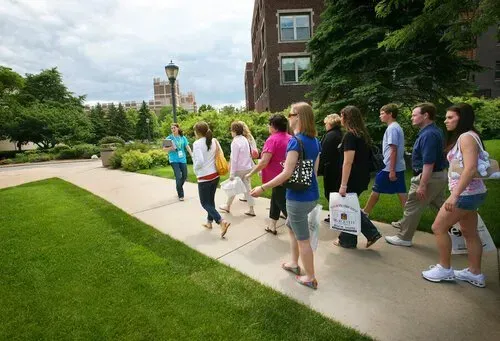
Juniors (and parents), take a breath. The college search can feel like trying to pick a favorite show on Netflix with 4,000 options and no remote. It’s overwhelming, and without a plan, nothing happens except mild panic and procrastination. Here’s how to cut through the noise: 1. Start close to home. Visit a small, medium, and large college in your state — even if none of them are on your actual list. You’re gathering data, not declaring allegiance. Pay attention to the basics: campus vibe, feeling of safety, surrounding town. Not every school sits in a picture-perfect bubble. (Looking at you, USC area.) Understanding what size and setting feel right is the foundation for building a meaningful college list. 2. Turn travel into opportunity. Heading out of town for Spring Break or a long weekend? Add a campus or two to the itinerary. You may think you’d never go to college in that region, but campus visits have a way of changing minds, or reinforcing them. Also, test the travel logistics. If getting from home to campus feels like planning a Mars mission, that’s worth knowing. 3. Make each visit count. Sign up for the official tour. But if you can skip the info session, do it. They’re often more marketing than substance, and the biggest takeaway is usually a free pen. Instead, ask Admissions if you can sit in on a class, tour the department you’re actually interested in, or talk with a professor. That’s where you get the real story. A bachelor’s degree is a major investment both financially and personally. Treat the process for what it is: a thoughtful evaluation of your options. The campus visit remains one of the most valuable tools you have. Use it intentionally, and you’ll make smarter choices with far less stress and a fantastic outcome.

College Application Season, a/k/a Application Hell, is upon us. Every year, my Colorado kids are pushed to meet the Colorado Free Application Days, which typically are in early October. This early deadline is both a blessing and a curse. Let me explain. The curse is that it’s early, and the pressure to complete applications and essays is intense. The blessing is that it’s early, which requires students to get their act together and finish their applications and essays. This dichotomy mirrors my experience working with teens. It is, you guessed it, both a blessing and a curse. Now, I realize I am being over-generalistic, but bear with me. The blessings are innumerable: they are bright, funny, kind, compassionate, and very, very aware. Of all kinds of stuff. Gen Z is fascinating in that they have the emotional intelligence of, say, a 45-year-old mother of three. They are informed and driven to act to impact injustices, locally and globally. And bonus! They can handle any of your persnickety tech issues without blinking an eye. Gen Z restores my faith in humanity, and for that, I am deeply grateful. And the curse? They cannot write. By the grace of God, each year, I have a handful of students who can write brilliantly, beautifully. But every year, that handful gets smaller, and along with that so does my faith in humanity. I firmly believe and bear witness to the fact that readers make writers. This is true for me. It is true for my children, and it’s just true. The rant? Devices and social media (I know, I am a broken record) are the culprit. Gen Z is growing up in a world of clickbait communication and constant distraction, fueled by addictive algorithms. The result - many have the attention span of a gnat. NO ONE IS READING ANYMORE. I don’t mean a headline. I mean a full article, let alone a book. Remember those? As a mother of three adults, functioning children, and a professional who has worked with hundreds of teens, please take heed. Read to your kids. Invite your kids to read to you. Their future depends on it.